
Patented Wet Soil Nursery System
The Coast Is Losing the Fight.
We Built the Solution.
RED WHITE & BLACK's patented Wet Soil Nursery System grows mangrove ecosystems directly on sea walls, protecting coastlines, restoring marine habitats, and supporting climate resilience at global scale.

The Crisis
Traditional shoreline planting is a losing battle.
The ocean doesn't wait. Neither can we.
The Patented Solution
Engineered to Survive Where Nature Can't Plant Alone
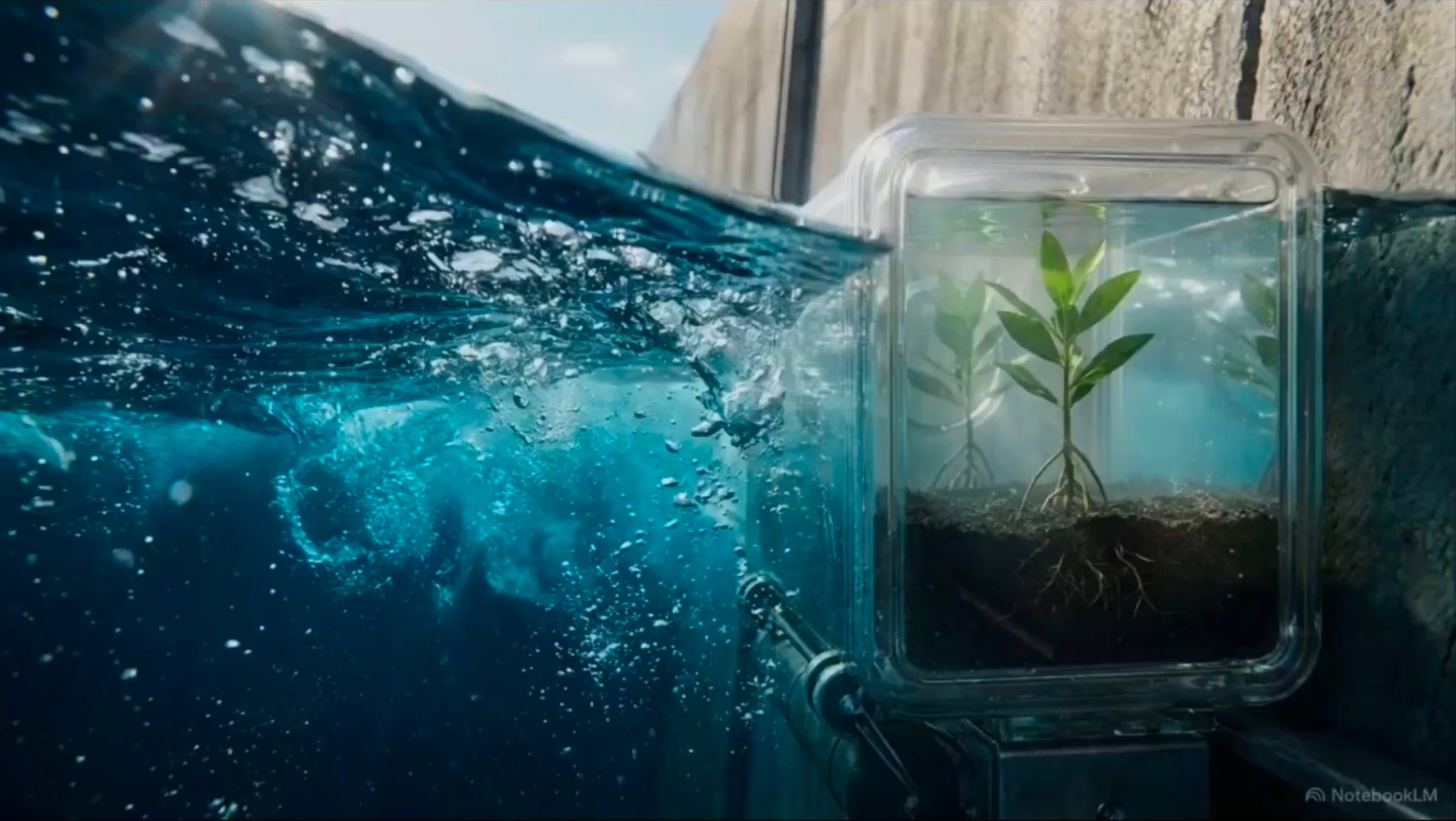
The patented Wet Soil Nursery System is a growing platform designed to be mounted directly on sea walls, giving mangrove seedlings the stable, nutrient-rich environment they need to establish roots before facing open-water conditions.
- Patented growing platform technology
- Designed for sea walls worldwide
- Higher survival rates vs. open-shore planting
- Designed to scale to any coastline, any climate
Patent-Specified Technology
Monitor Your Pod From Anywhere in the World
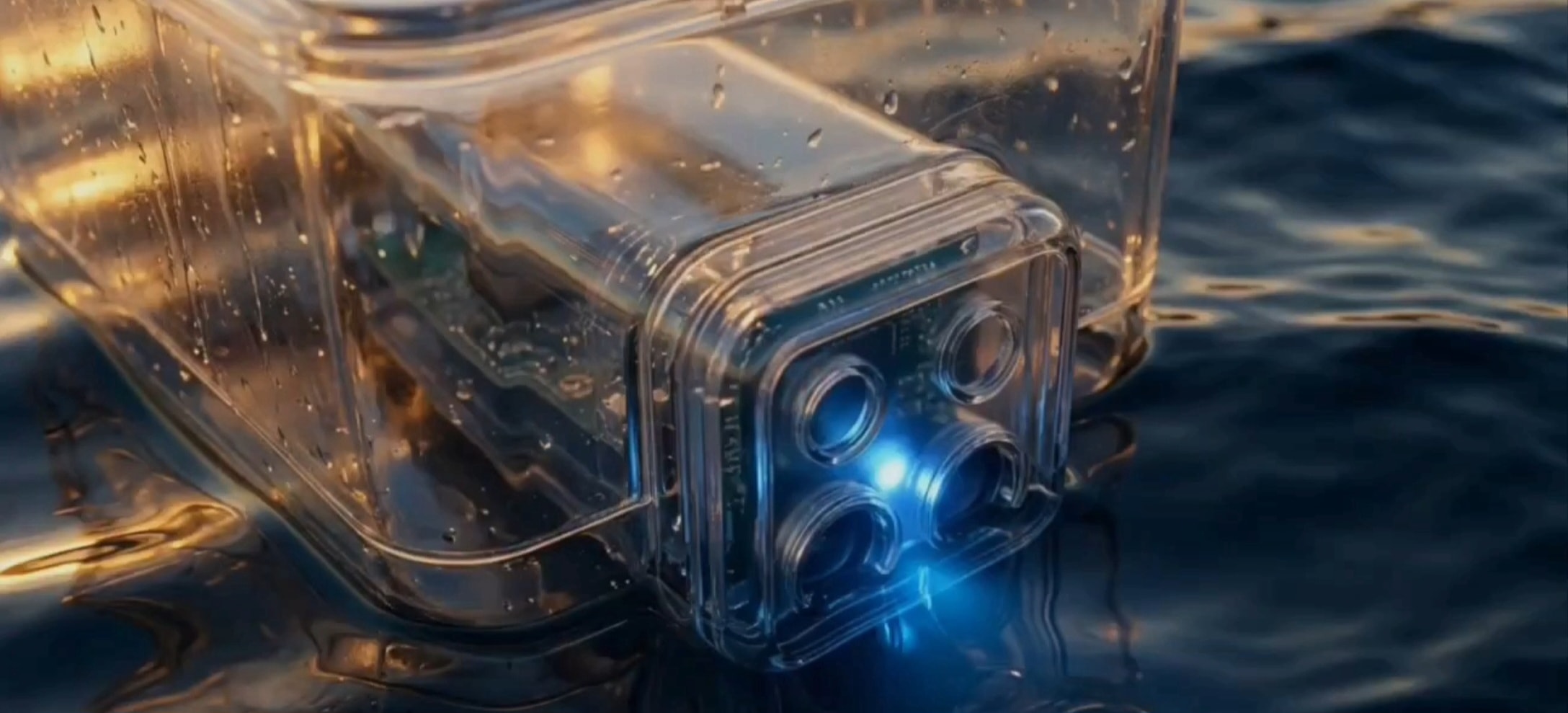
The patented Wet Soil Nursery System integrates embedded sensors that stream live environmental data directly to your mobile device — no boat, no dive gear, no site visit required.
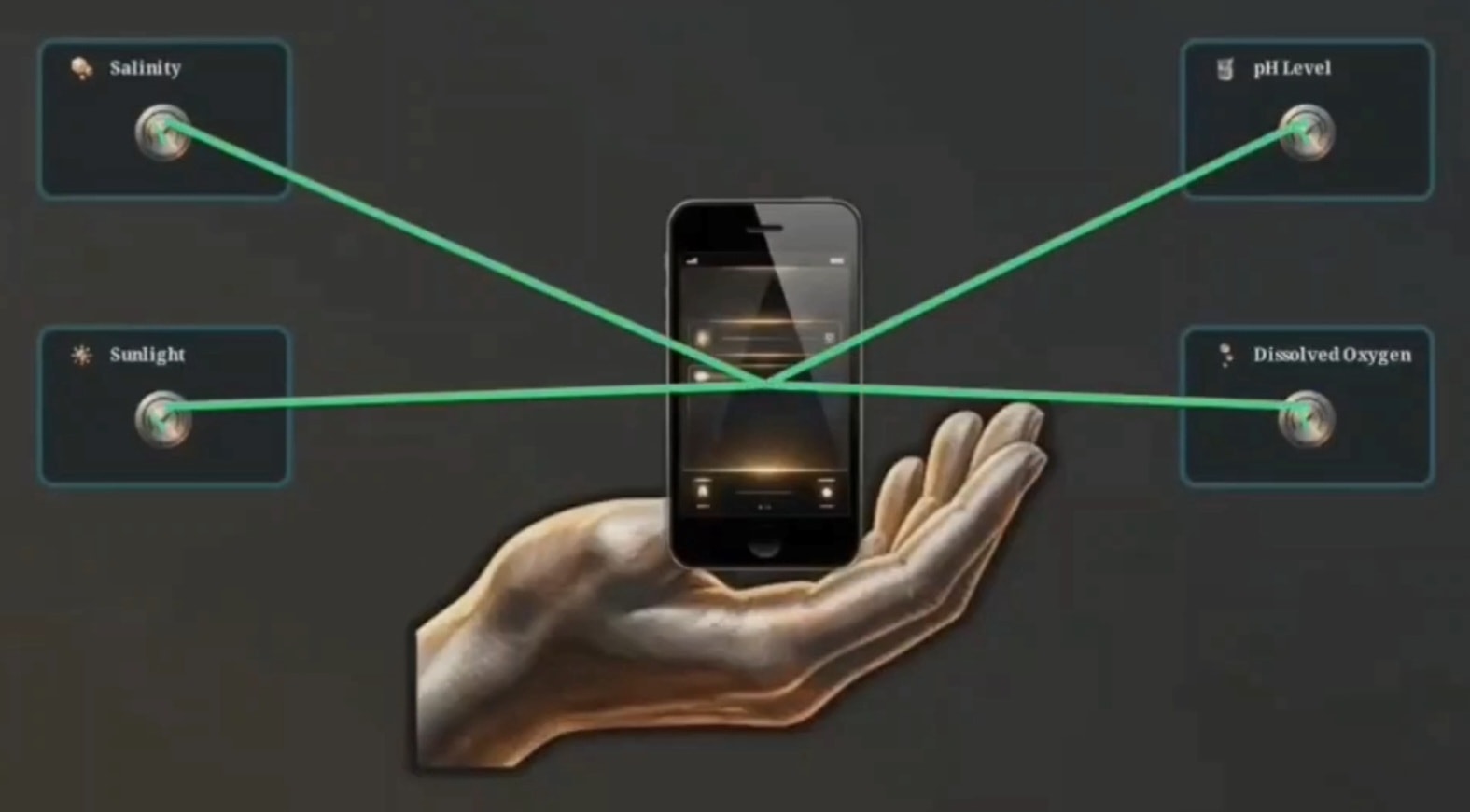
Real-time salt concentration readings ensure the pod environment stays within the optimal range for mangrove seedling survival and root development.
Continuous pH monitoring detects acidification events early, allowing pod owners to take corrective action before seedlings are stressed.
Light-level sensors track photosynthetic opportunity across tidal cycles, confirming each pod is positioned for maximum growth potential.
Oxygen saturation data reflects the health of the surrounding water column and the microbial activity supporting root establishment.
Every pod transmits live data to its owner's phone — salinity, pH, dissolved oxygen, and sunlight — so you can watch your mangroves grow from anywhere on Earth.

Future Development
Adapting the Wet Soil Nursery System for Coral Reef Restoration
The same engineering principles that allow the patented pod system to establish mangrove roots in open-water conditions are being studied for their potential to support coral fragment cultivation and reef substrate anchoring — bringing structured, monitored restoration to one of the ocean's most endangered ecosystems.
The pod's weighted base and tidal-flex tether design — originally engineered to hold mangrove seedlings against wave action — can be adapted to anchor coral fragment frames to degraded reef substrate at precise depths, eliminating the drift and abrasion that kill juvenile coral in open-water nurseries.
The same embedded sensor array that streams salinity, pH, dissolved oxygen, and light data to pod owners' phones would be repurposed to monitor the water chemistry conditions critical to coral calcification — giving restoration teams real-time alerts when bleaching-risk thresholds are approached.
Just as individuals and institutions can own a mangrove pod today, the planned coral adaptation would extend the same ownership and leasing framework — enabling reef restoration to be funded, tracked, and verified at the individual pod level, opening new pathways to carbon and biodiversity credit eligibility.
The Wet Soil Nursery System was designed to solve the hardest problem in coastal restoration — planting in open water. Coral reefs are the next frontier.
Coral reef adaptation is a planned future development. Current patent and commercial operations focus on mangrove restoration.

Aiming for the Seastars!
Mangroves Beyond the Tropics. That's the Goal.
By integrating a heating element directly into the Wet Soil Nursery System pod, RED WHITE & BLACK is pushing restoration into waters once considered permanently off-limits, temperate coastlines, higher latitudes, and cold-water environments where mangroves have never grown.
Mangroves evolved for the tropics. Their seedlings demand warm, stable water temperatures to take root: a biological reality that has kept restoration locked to equatorial zones for decades. We're working to change that. The Wet Soil Nursery System pod incorporates a low-energy heating element embedded within the growing substrate, creating the precise thermal microenvironment mangrove seedlings need, independent of the surrounding water temperature. The ambition is significant: sea walls in the Pacific Northwest, the British Isles, Patagonia, and other cold-water coastlines that have never seen a mangrove could one day support thriving restoration sites. We're aiming for the seastars!
The heating element operates at minimal energy draw and is engineered for long-term submersion in marine environments. It does not warm the surrounding ocean, it creates a protected thermal buffer within the pod itself, shielding the root zone through the critical early establishment phase regardless of ambient water temperature.
Built to Last. Built Responsibly.
Manageable by Design. Made from Recycled Materials.
The Wet Soil Nursery System pod is engineered for the long haul and for the planet. Each pod is manufactured using recycled materials, reducing the environmental footprint of the very technology designed to restore it. The system is built to be maintained, adjusted, and redeployed without specialized equipment or large crews. A pod owner, a conservation team, or a coastal community can manage their pods directly: checking seedling progress, replacing growing medium, and monitoring establishment without needing to call in engineers.
The technology that restores coastlines shouldn't cost the planet to build. Recycled materials. Manageable by anyone. Ready for sea walls worldwide.
Recycled Material Construction
Pod components are manufactured from recycled materials, keeping waste out of landfills and reducing the carbon cost of production before a single seedling is planted.
Designed for Direct Management
No specialized crews required. Pod owners and local teams can inspect, maintain, and service pods directly, making community-led coastal restoration genuinely practical.
Redeployable Infrastructure
Pods are built to be repositioned and reused across deployment cycles. Once seedlings establish and transfer to the shoreline, the pod infrastructure moves to the next site.
Marine-Grade Durability
Engineered for long-term submersion in saltwater environments. The pod withstands tidal cycles, storm surge, and marine biofouling without degrading the growing environment inside.
Why Mangroves Matter
One Ecosystem. Extraordinary Impact.

Carbon Credits & Sequestration
Research suggests mangroves sequester carbon at up to 5 times the rate of tropical rainforests, making them among the most valuable blue carbon ecosystems on Earth.

Marine Life Habitat
An estimated 80% of worldwide commercial fish catches depend directly or indirectly on mangrove ecosystems, making healthy mangrove forests a cornerstone of global fisheries.
Coastal Protection
Dense mangrove belts can reduce wave heights by up to 66%, providing a living buffer against storm surge and erosion.

Storm Surge Reduction
Mangrove root systems dissipate wave energy and reduce the inland penetration of storm surge during hurricanes and tropical storms.
Oxygen & Air Quality
Mangroves produce significant oxygen and filter airborne pollutants, improving air quality for coastal communities.
Biodiversity
Mangrove forests support extraordinary biodiversity: from migratory birds and nesting sea turtles to juvenile reef fish and coastal invertebrates.
The Three Pillars
Red, White & Black: The Mangrove Triad
Not all mangroves are the same. Three dominant species — Red, White, and Black — each occupy a distinct ecological niche, deploy radically different survival strategies, and deliver unique benefits to the coastlines they protect. Together, they form an interlocking system that no single species could sustain alone.

The Pioneer
Seaward frontier — deepest water zone
The Red Mangrove is the outermost defender — the species that stands directly in the water, absorbing the full force of waves, tides, and storm surge. Its defining feature is its extraordinary prop root system: a dense tangle of arching aerial roots that descend from the trunk and branches into the water below, anchoring the tree against currents and creating a physical barrier that dissipates wave energy before it reaches the shore.
These prop roots do far more than anchor. They trap sediment, gradually building new land where none existed. They create a labyrinthine nursery habitat — a protected underwater world where juvenile fish, crustaceans, and invertebrates shelter from predators. An estimated 80% of commercially important fish species spend critical early life stages in Red Mangrove root systems.
Red Mangroves reproduce via vivipary — their seeds germinate while still attached to the parent tree, producing a torpedo-shaped propagule that can float for up to a year before taking root. This makes them natural colonizers of new coastlines, and the primary target species for the Wet Soil Nursery System's seaward deployments.

The Consolidator
Landward mid-zone — higher elevation
Where the Red Mangrove colonizes open water, the White Mangrove (Laguncularia racemosa) establishes itself in the calmer, higher-elevation zone behind it — the territory already partially stabilized by its seaward neighbor. It is the consolidator: the species that builds on what the Red Mangrove started, deepening the forest canopy and locking in the land gains made by prop-root sediment trapping.
The White Mangrove's most remarkable adaptation is its salt-excretion system. Unlike the Red Mangrove, which excludes salt at the root level, the White Mangrove actively secretes excess salt through specialized glands on its leaves — a visible, crystalline process that allows it to thrive in hypersaline conditions that would kill most plants. Look closely at the leaves and you can see the salt crystals.
Its root system includes both shallow lateral roots and small pneumatophores — pencil-like projections that emerge from the soil to access oxygen in waterlogged sediment. This dual system makes it exceptionally adaptable to fluctuating water levels, and its dense canopy provides critical nesting and roosting habitat for coastal bird species.

The Carbon Engine
Intertidal zone — highest carbon storage
The Black Mangrove (Avicennia germinans) is the most cold-tolerant and geographically widespread of the three, pushing further into temperate latitudes than any other mangrove species. It is also the most remarkable carbon sequestration machine in the coastal ecosystem — storing carbon not just in its biomass, but deep in the anaerobic sediment beneath it, where organic matter is locked away for centuries.
Its signature adaptation is its pneumatophore forest: thousands of pencil-like root projections that spike upward from the mud around the base of the tree, each one a breathing tube that allows the root system to access oxygen in the oxygen-depleted, waterlogged sediment of the intertidal zone. A mature Black Mangrove can be surrounded by tens of thousands of these projections, creating a dense mat that traps sediment and organic material.
Like the White Mangrove, it excretes salt through its leaves — but it also tolerates the most extreme salinity conditions of the three species, colonizing hypersaline flats where little else survives. Its cold tolerance makes it the primary candidate for the Wet Soil Nursery System's cold-climate expansion program, pushing mangrove restoration into temperate coastlines for the first time.
Why All Three Matter
A Zonation System Built by Evolution
In a healthy mangrove ecosystem, these three species don't compete — they zone. Red Mangroves hold the seaward edge, their prop roots breaking waves and building land. White Mangroves consolidate the middle ground, their canopy sheltering birds and their roots stabilizing the sediment the Red Mangroves deposited. Black Mangroves anchor the landward fringe, their pneumatophore forests locking carbon into the sediment for centuries.
Remove any one species and the system weakens. The Wet Soil Nursery System is designed with this zonation in mind — deploying the right species at the right tidal elevation to rebuild the full ecological stack, not just plant trees.

Avian Habitat
A Lifeline for Hundreds of Bird Species
Mangrove forests are among the most critical bird habitats on Earth. Their dense root systems, sheltered canopies, and rich food supply — from fish and crustaceans to insects — make them irreplaceable nesting, roosting, and feeding grounds for both resident and migratory species worldwide.
Roseate Spoonbill
Least ConcernNests colonially in mangrove canopies across the Gulf Coast and Caribbean; forages in tidal shallows beneath the roots.
Mangrove Warbler
Near ThreatenedA species complex found exclusively in mangrove forests from Mexico to Ecuador — one of the few birds entirely dependent on this habitat.
Yellow Warbler
Least ConcernThe mangrove subspecies (Setophaga petechia) breeds almost exclusively in mangroves throughout the Caribbean and Central America.
Great Blue Heron
Least ConcernUses mangrove islands as colonial nesting rookeries, relying on the elevated root structure for protection from ground predators.
Osprey
Least ConcernBuilds large platform nests atop mangrove canopies in coastal Florida, the Bahamas, and throughout the Indo-Pacific.
Mangrove Kingfisher
VulnerableEndemic to East African mangroves; listed as Vulnerable due to direct habitat loss from coastal development and deforestation.
Over 340 bird species have been recorded using mangrove ecosystems globally (Smithsonian Tropical Research Institute). BirdLife International identifies mangrove loss as a primary driver of population decline for obligate mangrove-dependent species.
Ancient Survivors
Sea Turtles & Mangroves: A 100-Million-Year Partnership
Sea turtles have navigated Earth's oceans for over 100 million years. Today, all seven species are classified as vulnerable, endangered, or critically endangered — and every one of them depends, at some stage of life, on the coastal ecosystems that mangroves anchor, protect, and sustain.


Nesting Beaches: Mangroves as Coastal Armor
Protecting the beaches where life begins
Female sea turtles return to the exact beach where they hatched — sometimes after 20–30 years at sea — to lay their eggs. These nesting beaches exist only where the coastline is stable: protected from erosion, shielded from storm surge, and backed by healthy coastal vegetation. Mangroves are the primary architects of that stability.
By dissipating wave energy and trapping sediment, mangrove forests prevent the beach erosion that destroys nesting habitat. A single major storm on an unprotected coastline can scour away meters of beach — eliminating nesting sites for an entire season. Research published in PLOS ONE found that beaches backed by intact coastal vegetation, including mangroves, experience significantly lower erosion rates and higher nest survival than exposed beaches.
Sea level rise — projected to increase by 0.3–1.0 m by 2100 — threatens to inundate low-lying nesting beaches entirely. Mangroves are one of the few natural systems capable of keeping pace with rising seas by accumulating sediment and building elevation, effectively lifting the coastline as the ocean rises.
Juvenile Refuge: The Lost Years, Found
Shelter, food, and survival in the root labyrinth
After hatching, sea turtle hatchlings enter what researchers call "the lost years" — a poorly understood developmental period during which juveniles are almost impossible to track. Studies using satellite telemetry and genetic sampling have increasingly confirmed that mangrove systems are a critical refuge during this phase, providing shelter from predators, abundant invertebrate prey, and calm, warm water conditions that support rapid growth.
Hawksbill sea turtles (Eretmochelys imbricata) — critically endangered — are particularly dependent on mangrove-adjacent reef and seagrass systems. Their primary food source, sponges, is concentrated in the nutrient-rich waters that mangrove root systems filter and enrich. A study in Endangered Species Research found hawksbill foraging activity directly correlated with proximity to intact mangrove habitat.
Green sea turtles (Chelonia mydas) depend on the seagrass meadows that mangroves protect. Mangrove-filtered runoff reduces the turbidity and nutrient overload that kills seagrass — meaning healthy mangroves are a prerequisite for the feeding grounds green turtles require to reach reproductive maturity.
Why This Matters for RED WHITE & BLACK
Every Pod Deployed Is a Nesting Beach Defended
The Wet Soil Nursery System doesn't just grow mangroves — it rebuilds the coastal architecture that sea turtles have depended on for 100 million years. Each pod anchors a new mangrove seedling in the seaward zone, where it will spend decades dissipating wave energy, trapping sediment, and stabilizing the beach profile that female turtles navigate back to every nesting season.
In the Caribbean — where RED WHITE & BLACK's initial deployments are focused — loggerhead, green, hawksbill, and leatherback turtles all nest on beaches directly adjacent to mangrove systems. Restoring those systems isn't a side benefit of the pod program. It is the program.
Caribbean-nesting species
IUCN Red List classifications, 2024
Community Ownership
Own a Piece of the Solution
Pods can be owned or leased by corporations, government agencies, universities, and individuals alike.
Corporations & Companies
Lead with purpose. Restore with impact.
Companies can own or lease pods as part of their ESG commitments, carbon credit programs, or sustainability initiatives. Named pod ownership provides verified impact data for annual reports and stakeholder communications.
State & Local Government
Protect your coastline. Serve your community.
State and local government agencies can deploy pods to protect public infrastructure, restore coastal ecosystems, and meet environmental mandates, with verified impact data for public reporting.
Federal Government
Scale the solution. Protect the nation's shores.
Federal agencies can deploy the Wet Soil Nursery System at national scale, integrating the patented technology into coastal resilience programs, climate adaptation mandates, and international conservation commitments.
Families & Individuals
Leave something real behind.
Anyone can own a pod. Name it after your family, dedicate it to someone you love, or simply take personal responsibility for a piece of the planet. Individual pod ownership is one of the most direct acts of environmental stewardship available.
Universities & Research Institutions
Turn research into restoration.
Universities and academic institutions can partner with RED WHITE & BLACK to deploy pods as living research platforms, studying blue carbon sequestration, coastal ecology, and climate resilience in real-world conditions.

Global Stakes
of global mangrove forests estimated lost over the past half century
Half the World's Mangroves Are Already Gone.
Sea walls line coastlines on every continent. Every one of them is a potential restoration site. The Wet Soil Nursery System turns existing infrastructure into a global planting network.
"The window to act is not closing. It is closed, unless we build the infrastructure to plant where planting has always failed."

Island Nations & Coastal Communities
A Lifeline for the World's Most Vulnerable Coastlines.
For island nations and tropical coastal communities, the stakes of coastal degradation are existential. Rising seas, intensifying storms, and collapsing marine ecosystems threaten not just infrastructure, but entire ways of life. The Wet Soil Nursery System offers a proven, deployable solution that addresses all of these threats simultaneously.
Carbon Credit Revenue for Island Economies
Mangroves sequester carbon at up to 5 times the rate of terrestrial forests, making them among the most valuable blue carbon ecosystems on Earth. Island nations that deploy the Wet Soil Nursery System can generate verified carbon credits, creating a new, sustainable revenue stream that funds ongoing restoration, coastal management, and community development.
"Restoration that pays for itself, and keeps paying."

Hurricane & Tropical Storm Defense
Dense mangrove belts are among nature's most effective storm barriers. Research shows mangrove forests can reduce wave heights by up to 66% and storm surge by several meters, providing a living buffer between the open ocean and coastal communities. For island nations in hurricane corridors, a restored mangrove coastline is critical infrastructure.
Nature — Mangrove Wave Attenuation (66% wave reduction)
Fisheries & Food Security
An estimated 80% of worldwide commercial fish catches depend directly or indirectly on mangrove ecosystems. Restoring mangrove coastlines directly rebuilds fish nursery habitat, supporting the artisanal and commercial fisheries that island communities depend on for food security and economic livelihood.
FAO — Mangroves & Fisheries (80% of fish catches)
Shoreline Stabilization & Land Retention
Island nations face an accelerating threat of land loss from coastal erosion and sea level rise. Mangrove root systems bind sediment, reduce erosion, and can actively build land over time, helping island communities retain the physical territory that defines their sovereignty and identity.
IPCC SROCC — Sea Level Rise & Coastal Communities
Ecotourism & Reef Protection
Healthy mangrove ecosystems filter runoff, reduce sedimentation, and protect adjacent coral reefs: the foundation of the dive tourism and sport fishing industries that drive island economies. Restoring mangroves is an investment in the entire coastal ecosystem, not just the shoreline.
NOAA — Mangrove ImportanceClimate Adaptation & Sovereignty
For small island developing states (SIDS), the Wet Soil Nursery System offers a path to proactive climate adaptation, not just reactive disaster response. Owning and deploying the technology gives island governments direct control over their coastal resilience, independent of foreign aid cycles or international climate negotiations.
UN OHRLLS — Small Island Developing States
Join the Team
We're Building Something That Has Never Been Built Before.
RED WHITE & BLACK is a small, mission-driven team working at the intersection of environmental science, patented technology, and global coastal restoration. We don't hire for roles, we look for people whose skills and expertise could meaningfully accelerate what we're building. If you believe you have something to contribute, we want to hear from you.
Marine & Coastal Science
Biologists, ecologists, oceanographers, and wetland scientists who can deepen our research, validate field data, and help us publish the impact of the Wet Soil Nursery System in peer-reviewed literature.
Engineering & Manufacturing
Mechanical, materials, and manufacturing engineers who can help us refine the pod design, optimize production, and scale deployment to coastlines around the world.
Carbon Markets & ESG
Specialists in blue carbon verification, carbon credit markets, and ESG reporting who can help us build the frameworks that turn mangrove restoration into verified, tradeable impact.
Policy, Law & International Relations
Experts in environmental law, international climate policy, and coastal governance who can help us navigate the regulatory landscape and build partnerships with governments and intergovernmental bodies.
Business Development & Partnerships
Relationship builders with networks in corporate sustainability, impact investing, government procurement, or international development who can open doors to the organizations that need this technology most.
Something We Haven't Listed
If you have a skill, background, or connection that you believe could make a meaningful difference to RED WHITE & BLACK's mission, even if it doesn't fit neatly into a category above, we want to hear from you. Describe what you bring and why it matters.
RED WHITE & BLACK is an early-stage company. We are not always hiring for paid positions, but we are always open to conversations with exceptional people. If your expertise aligns with our mission, reach out.
Patent Licensing
Help Us Build and Make the Technology a Reality.
The Wet Soil Nursery System is protected by U.S. patent, and RED WHITE & BLACK actively invites qualified organizations to license the technology for deployment in their own regions and programs. Licensing is designed to accelerate global restoration, not restrict it.
NGOs & Conservation Organizations
Environmental nonprofits and conservation groups can license the system to deploy pods within their existing coastal restoration programs, adding a proven, patented technology to their toolkit without starting from scratch.
Government & Intergovernmental Bodies
National agencies, coastal authorities, and intergovernmental organizations can license the system for large-scale public deployment, integrating the Wet Soil Nursery System into national climate resilience and coastal protection mandates.
Private Sector & Impact Investors
Companies and impact investment funds can license the technology to build regional restoration programs, generate verified carbon credits, and meet ESG commitments with a scientifically validated, patent-backed system.
Universities & Research Institutions
Academic institutions can license the system to establish independent research deployments, studying coastal ecology, blue carbon sequestration, and climate adaptation while contributing to the global restoration record.
Licensing inquiries are evaluated on a case-by-case basis. RED WHITE & BLACK prioritizes partners with demonstrated coastal restoration capacity and a commitment to verified impact reporting.
Corporate Carbon Responsibility
Is Your Industry Ready to Erase Its Carbon Footprint?
The world's heaviest-emitting industries now have a proven, patented path to measurable carbon removal — not offsets, not promises. Real mangrove ecosystems, deployed at scale on existing sea walls.

Oil & Gas
~15% of global emissionsDeploy pods along refinery coastlines and offshore platforms to offset operational carbon and meet ESG mandates.
IEA World Energy Outlook 2023Power Generation
~25% of global emissionsCoastal power plants can sponsor pod arrays on adjacent sea walls, turning infrastructure into living carbon sinks.
US EPA — Global GHG OverviewManufacturing & Steel
~21% of global emissionsIndustrial facilities near coastlines can fund pod deployments to earn verified carbon credits and meet net-zero targets.
IEA — Iron & Steel RoadmapAviation
~2.5% of global emissionsAirlines and airports can purchase pod ownership as a high-integrity carbon removal strategy beyond standard offsets.
ATAG — Aviation Facts & FiguresShipping & Logistics
~3% of global emissionsPort authorities and shipping companies can deploy pods along harbor sea walls, restoring coastlines they depend on.
IMO — Shipping GHG EmissionsConstruction & Real Estate
~11% of global emissionsCoastal developers can integrate pod ownership into project ESG profiles, adding measurable ecological value to every build.
IEA — Buildings & Construction EmissionsYour Industry. Your Coastline. Your Legacy.
Join the companies turning carbon liability into coastal restoration. Every pod you own is a verified, living carbon sink — not a paper credit.
Be Part of the RED WHITE & BLACK.
The technology exists. The need is urgent. What's missing is the community of owners, stewards, and partners willing to put their name on the solution. Join us.